


Let’s be brutally honest for a second. Making friends as an adult is absolutely exhausting. You text someone to grab a coffee; they reply three days later saying they are “super swamped,” and eventually, you both give up and watch Netflix alone in your sweatpants.
We humans love to pat ourselves on the back and claim we are the ultimate social creatures on planet Earth. We built massive, sprawling cities. We invented social media algorithms to stay connected 24/7. We force ourselves to attend incredibly awkward office holiday parties just to prove we can mingle.
But if you look out into the wild, the truth is actually a little humbling. Many animals have way better social lives than we do. And science has the receipts to prove it.
I’m not just talking about animals hanging out in a pack because they have to. I’m talking about deep, long-lasting friendships. I’m talking about neighborhood watch programs that actually work, intense family drama, holding grudges for decades, and even bizarre cultural fashion trends. Some animals will literally risk starvation to save a buddy who is having a bad day.
Here are the animals whose group chats are definitely way more active, loyal, and interesting than yours.

Elephants: The Ultimate Support System
If you ever want to feel incredibly guilty about how rarely you call your mom, just look at how elephants live. Their entire society is built around family, and specifically, the females.
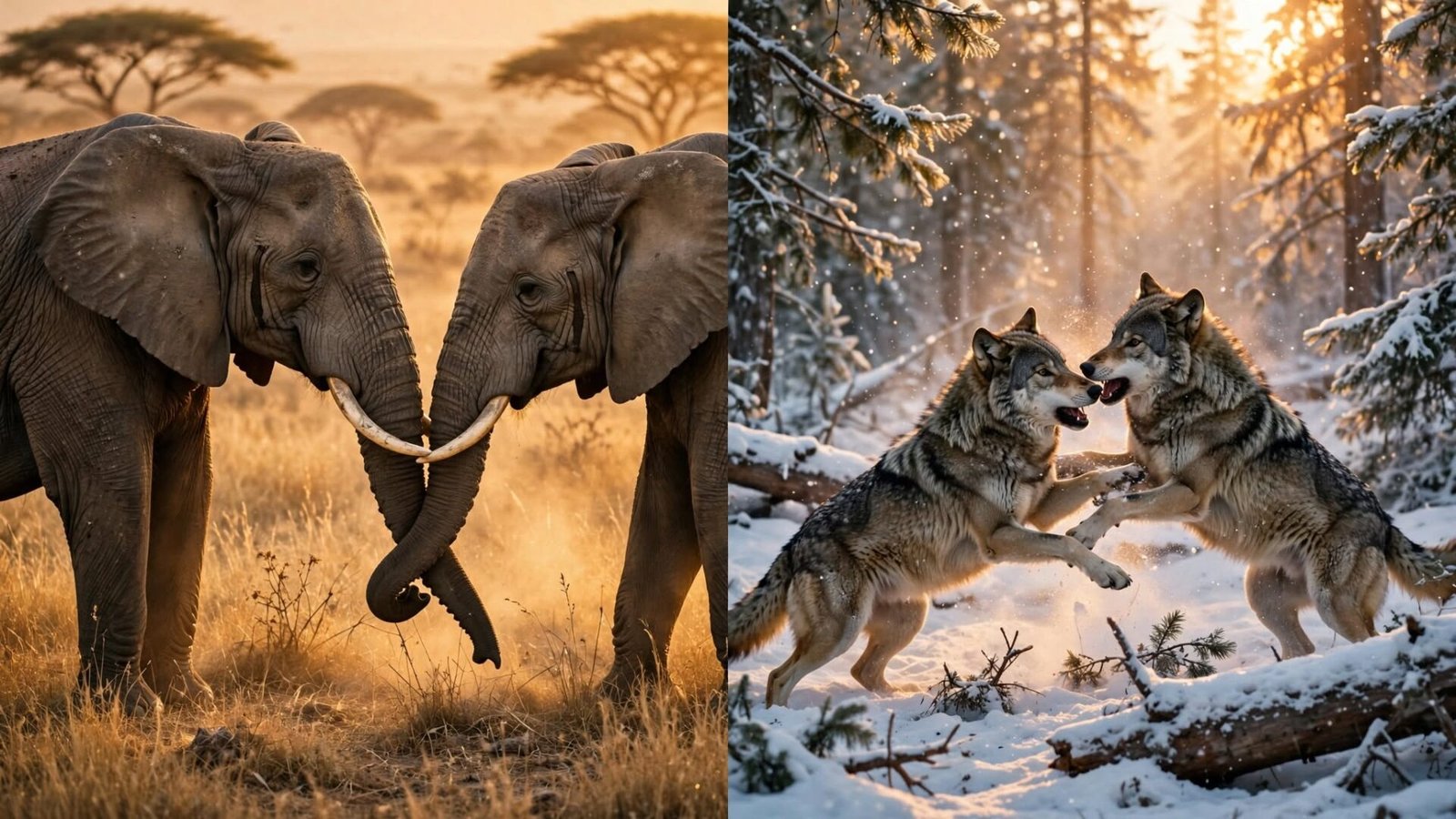
Elephant herds are completely run by the oldest, smartest, and most experienced female, known as the matriarch. The guys usually wander off to live the bachelor life when they hit puberty, but the daughters, sisters, and aunts stay together for their entire lives. They are basically the ultimate, ride-or-die moms’ group.
If a child elephant were caught in a slippery dust pit, the complete herd would not just stand around looking. They rush over, working together to push and pull the calf out safely. They actually have dedicated babysitters. If a mother desires a break to eat or simply take a snooze, some other girl within the herd will luckily watch the calf.
But what definitely proves their extreme emotional depth is how they handle demise. Elephants are one of the only animals on Earth that openly mourn. If a herd finds the bleached bones of another elephant out in the savanna—even one they didn’t personally know—they will completely stop what they are doing. They touch the bones gently with their trunks. They stand in total silence. They remember. It’s a level of pure empathy that honestly makes human society look a little bit cold by comparison.
Orcas: The Gossip Queens of the Ocean
Killer whales—orcas—are terrifying, highly efficient apex predators. But socially? They are essentially young adults walking around with their personal inside jokes, friend groups, and bizarre slang.
Orcas stay in extraordinarily tight-knit family pods. And just like elephants, the grandmas are completely in charge. A post-menopausal female orca has decades of wisdom about where to find food during a tough year, and the rest of the pod follows her leadership blindly.
But here’s the really crazy part: different pods have completely different cultures. They have entirely different hunting techniques and entirely different languages. If two pods meet in the middle of the ocean, they might not even be able to understand each other’s clicks and whistles. It would be like someone from New York trying to talk to someone from rural France.
They also have fads. Remember when everyone you knew was suddenly wearing silly bandages, or when everyone was doing the ice bucket challenge? Back in 1987, a female orca near Seattle started swimming around with a dead salmon balanced on her head like a tiny, gross hat. Within weeks, orcas from three completely different pods were all wearing dead salmon hats. A few months later, the trend just died out, and nobody did it again. They literally follow useless fashion trends just to fit in.
Meerkats: The Best Neighborhood Watch on Earth
You’ve definitely seen them in documentaries. They pop out of holes in the dirt and stand up on their hind legs, looking around frantically. But meerkats aren’t just being nosy; they are operating a highly organized, military-level society.
Living in the African desert is incredibly dangerous. Eagles want to swoop down and consume you from above, and snakes need to slip into your house and consume you from under. So, meerkats share the workload. Every single morning, they wake up and assign jobs. Some meerkats are the designated babysitters, staying back deep in the burrow to watch the kids while the parents work. Others are the foragers, tasked with digging for scorpions and grubs.

And then you have the sentinels. These are the guys standing guard on the highest rock they can find. They don’t eat. They don’t play. They just watch. If they spot danger, they have entirely different alarm calls for different threats. One specific scream means, “Bird, run to a hole right now!” Another completely different yell means, “Snake, grab a stick and let’s gang up on it!”
They literally rotate these shifts so nobody gets too tired or too hungry. Name one human homeowners association where people actually volunteer for guard duty in the blistering heat just so their neighbors can eat lunch in peace. Exactly. You can’t.
Bonobos: Make Love, Not War
Chimpanzees get all the attention in pop culture, but honestly, they can be incredibly aggressive, territorial, and violent. Their close genetic cousins, the bonobos, took a totally different evolutionary route. They are essentially the hippies of the animal kingdom.
In bonobo society, females run the show. Even though the adult males are physically large and more potent, the women form severe, unbreakable alliances with each other. If a male steps out of line, acts competitive, or tries to bully someone, the girls straight away gang up on him and chase him off. Because the females fiercely police bad behavior, bonobo societies are incredibly peaceful.
Their main way of solving arguments? Pure affection. If two bonobos get into a fight over a piece of fruit, they don’t tear each other apart. They hug. They groom each other’s fur. They even engage in sexual contact just to instantly cut the tension in the room. They prioritize keeping the peace and maintaining their friendships over dominating each other. They literally figured out a version of world peace, and they did it just by being ridiculously nice to each other.
Wolves: Busting the “Alpha” Myth
For decades, hustle-culture bros on the internet have loved talking about being the “alpha wolf.” The whole idea is that the biggest, meanest, most aggressive wolf fights his way to the top of the pack and rules everyone else with an iron fist.
Science actually proved that entirely wrong years ago. The guy who originally coined the term “alpha wolf” spent the rest of his career writing books trying to take it back because he realized he was wrong.
In the wild, a wolf pack isn’t a violent street gang constantly fighting for dominance. It’s literally just a family. A mom, a dad, and their kids from the last few years. The so-called “alphas” are just the parents. And they don’t rule by fear or violence; they rule by taking care of their kids.
Wolves are relatively sweet and affectionate to everyone. They play tag, they tackle every different within the snow for amusement, and they mainly bring meals back for individuals of the % who are too weak or too ill to seek. If a wolf is badly injured, the family will literally chew up meat and regurgitate it for them so they don’t starve to death. They are fiercely loyal to their family, not fiercely aggressive to their own.
Dolphins: Gangs, Wingmen, and Actual Names
Dolphins are cute, right? They jump out of the water at theme parks and smile. Sure. But out in the wild, they are basically running the ocean like an intense mafia movie.

Let’s start with how they talk. Dolphins don’t just whistle randomly into the void. They have “signature whistles.” These are actual, specific names. A dolphin introduces itself by whistling its name, and other dolphins will literally call them by that specific name to get their attention. Scientists found out they even remember the names of friends they haven’t seen in over 20 years.
Male dolphins are also the ultimate wingmen. They will form “alliances” with two or three other guys. These little gangs will stick together for decades. They assist each other in fighting off competitors, protecting their territory, and finding buddies.
And if their small gang runs into a much bigger problem? They will literally call in a “second-order alliance”—which is basically a rival gang that they have a temporary peace treaty with—to help them fight the bigger threat. It’s ocean politics, it’s wild, and it requires a level of social intelligence most humans barely use on a daily basis.
Vampire Bats: The Blood-Sharing BFFs
Okay, vampire bats sound incredibly gross. They drink blood in the dark. But hear me out, because they are actually some of the nicest, most supportive friends in the entire animal kingdom.
A vampire bat has an insanely fast metabolism. It can only go about two days without drinking blood before it literally starves to death. Finding a sleeping cow in the pitch black of night isn’t exactly easy, so it’s really common for a bat to strike out and come home to the cave hungry and desperate.
If that happens, a hungry bat will go up to a friend in the cave and beg. The friend will literally vomit up some of their own blood meal directly into the hungry bat’s mouth just to save its life.
But there’s a catch. Bats keep score. If a bat was generous in the past, the whole colony will step up to feed them when they are having a bad night. But if a bat is a known freeloader who constantly begs for food but never shares when they have a full belly? The others absolutely remember. They will refuse to feed the selfish bat and let them starve. It’s a perfect, brutal system of karma and mutual support. You give, you get.
Crows: Holding Grudges and Hosting Funerals
You probably already know crows are smart. But did you know they have a better memory for faces than you do?
If you are mean to a crow—say, you chase it off your porch with a broom—that crow will memorize exactly what your face looks like. But it gets so much worse. That crow will go back to its friends and literally tell them what you look like. Suddenly, an entire flock of crows that have never even met you will start dive-bombing your head when you walk outside. They pass down grudges across generations.
But they also take care of their own. When a crow dies, the others don’t just fly away and forget about it. They gather around the body in the grass in total silence. Scientists actually call it a “crow funeral.” They aren’t just being sad, though; they are actively investigating the crime scene. They are trying to figure out exactly what killed their friend so they can learn from it and avoid the same fate in the future. It’s a mix of deep social connection and brilliant, calculated survival tactics.

Sperm Whales: The Ocean’s Long-Distance Callers
Sperm whales have the largest brains on Earth. So it makes total sense that they have complex social lives we can barely comprehend.
They live in huge clans made up of thousands of individuals. But the ocean is massive, and they dive down into the pitch-black abyss to hunt giant squid. How do they keep in touch when they can’t see each other? They use clicks. And these clicks are so ridiculously loud that they can literally blow your eardrums out if you swim too close to them.
These clicks act like a massive long-distance Morse code system. And just like the orcas, different sperm whale clans have completely different dialects. They use these specific clicking patterns to say, “Hey, I’m part of your clan.” They spend hours just floating at the surface of the water, clicking back and forth in what scientists can only describe as massive gossip sessions, exchanging information across miles of ocean.
Wrapping It Up
So, the next time you leave a friend on examine for a week, or you fake to observe your phone in the grocery store so that you do not have to speak to an old coworker, reflect on consideration for the animals.
Think about the vampire bat actually puking blood to save his buddy’s life. Think about the elephant babysitting her sister’s kid so she can take a snooze. Think about the killer whales wearing dead fish on their heads simply to fit in with the cool crowd.
We might have constructed the net to stay connected; however, someplace along the line, we forgot a way to simply be a community. We isolate ourselves. We cancel plans. Animals didn’t forget. They know that surviving isn’t pretty much being the most powerful or having the sharpest teeth. It’s about having a team that honestly has your back when things get difficult.
Maybe we should put the phones down and take some notes.



+ There are no comments
Add yours