


Ask a friend about COP28 or COP29, and they’ll probably remember something. A headline, a fight over fossil fuels, and a famous activist on stage. Now ask about COP17, and you’ll likely get a blank look.
That’s a disgrace, because COP17 is taking place right now in Yerevan, Armenia’s capital, and it closes on 30 October. It’s about biodiversity, a tidy word for all the living things on Earth: flora, animals, fungi, insects, and the microbes in soil. Everything that keeps the planet ticking over without anyone sending an invoice.
So allow me to offer a cause for what’s going on, what the arguments are clearly about, and why you, someone who might also in no way have given a 2D idea to a wetland, have a stake in it.
So what is COP17, exactly?
COP stands for Conference of the Parties. The “events” are honestly the international locations where countries have signed a given treaty. Every two years or so, they get in a room, look at how things are going, and try to agree on next steps.

The confusing bit is that there’s more than one treaty, so there’s more than one COP. The big, famous climate summits belong to the UN climate convention. COP17 belongs to a first-rate one, the Convention on Biological Diversity (CBD), which has 196 parties, such as the European Union.
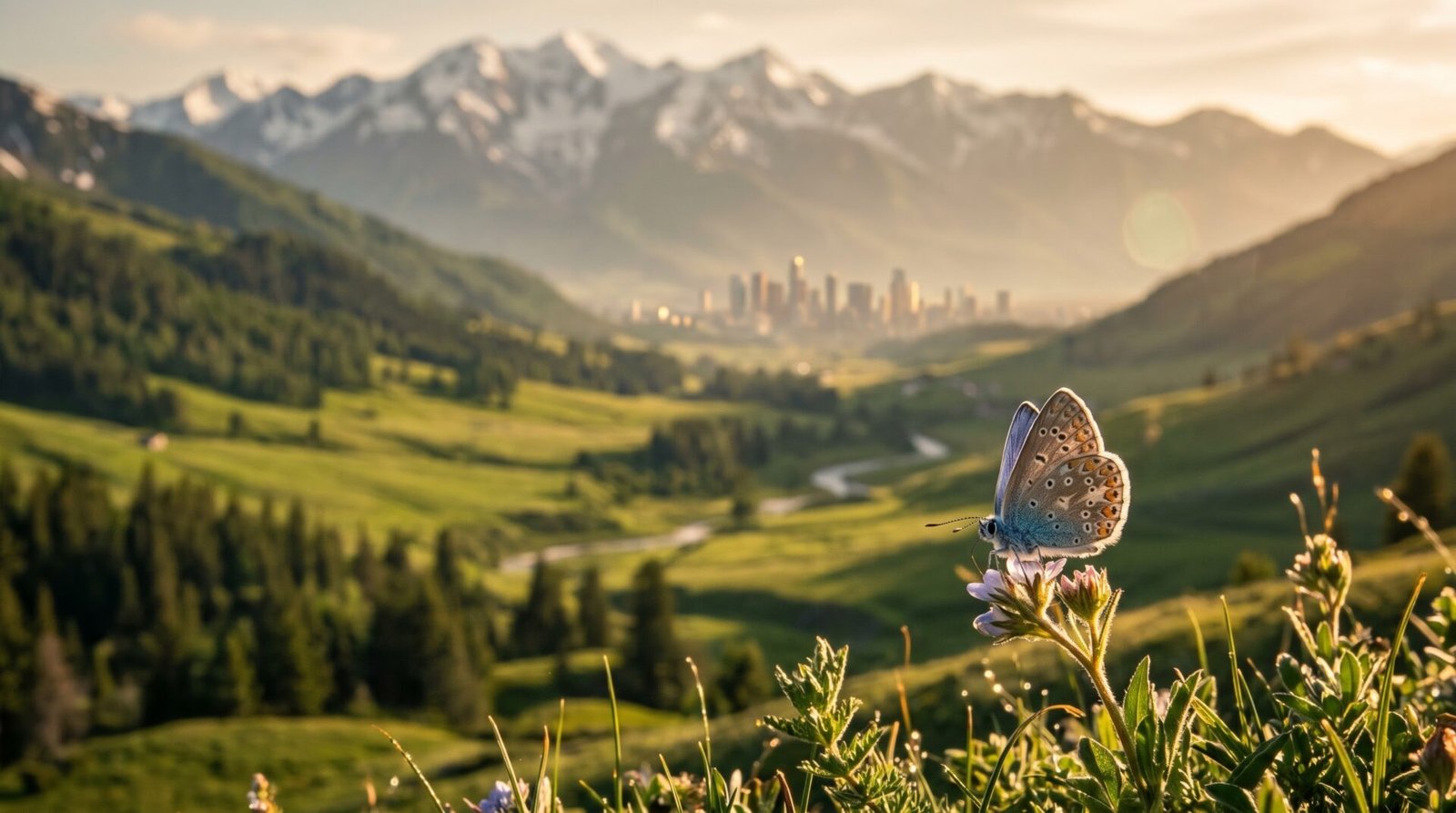
This conference runs from 19 to 30 October 2026 under the slogan “Taking Action for Nature”. It even has a mascot: a small blue butterfly that lives only in the grasslands around Yerevan, drawn with 23 colours, one for each of the world’s 23 nature targets.
The deal behind it all
To make sense of COP17, you need to understand a settlement signed in 2022, called the Kunming-Montreal Global Biodiversity Framework. Most people shorten it to the GBF. If it helps, think of it as nature’s version of the Paris climate deal.
Countries agreed to 23 goals, all due by 2030. The well-known one is “30 with the useful resource of 30″, due to this protecting at least 30 per cent of the planet’s land and 30 per cent of its oceans with the useful resource of the forestall of this decade. The rest of the list covers repairing damaged ecosystems, cutting pollutants, handling invasive species, and ending subsidies that damage nature.
And then there’s money, because there always is. The framework says at least $200 billion a year should flow into nature from all sources by 2030, with at least $30 billion of that coming as international support. On the way there, rich countries promised developing countries $20 billion a year by 2025.
Yerevan is the first proper check-in since all that was agreed. In other words, it’s the moment when somebody finally asks, “So, have we done what we said we’d do?”
The answer, sadly, is no.
I wish I could say otherwise. Armenia’s own prime minister, Nikol Pashinyan, admitted just before the talks that the world is not yet on track. When the host says it, you know it’s not a spin.
People who follow the numbers closely are even blunter. One finance-focused group pointed out ahead of the summit that all but one of the framework’s targets are off track, and the worst lagging ones are those tied to business and finance.
Take the $20 billion promise. Campaigners at the summit say it wasn’t delivered, and a conference preview noted that the report on it suggests the 2025 target was probably missed too.
The mood at the start wasn’t helped by who showed up. Only a small number of world leaders came to the high-level opening session, and most were from nearby Central Asian countries. UN Secretary-General António Guterres was there, but the crowd of heavy hitters you’d see at a big climate summit simply wasn’t.
What are they actually arguing about?
Under the polite diplomatic language, there are some real fights going on. These are the main ones.
Money, and who coughs it up
This is the knot in the middle of everything. The places with the richest wildlife are often tropical, developing countries. The money to protect that wildlife mostly sits in wealthy ones. Developing nations say rich countries did a lot of the damage and then promised help that hasn’t turned up.
Wealthy governments say their budgets are tight, and they’ve been pushing big emerging economies like China to chip in too. Back in Nairobi, where preparatory talks took place, those positions barely moved. South Africa said afterwards that big gaps remain, particularly on international finance and on how a system for sharing profits from genetic data should work.
There was a whole Finance Day on the schedule, and the ministers were set to take over from the technical negotiators in the last stretch.
Who gets paid for nature’s code?
This one sounds boring but really isn’t. Scientists can now study the genetic code of a plant, an animal, or a microbe and store it in an internet database. Companies then use the data to develop tablets, vegetation, cosmetics, and loads of other merchandise regularly without ever going near the actual organism.
So who deserves a share of the profit? The countries and communities that kept those species alive for generations, or just the company that did the lab work?
At the previous summit, in Cali, Colombia, countries created the Cali Fund as an answer. Big companies that use this data are encouraged to pay into it. Getting that fund to work properly and getting firms to actually pay is one of the toughest jobs in Yerevan. And yes, if you’ve ever taken medicine or eaten a modern crop variety, you have a small, indirect interest in how it turns out.

Making promises actually count
Anyone can write a target. Enforcing one is the hard part. Countries are meant to publish national plans and report on progress, but plenty are late or vague. Negotiators are trying to build a review process with a bit more bite so that “we’re working on it” can’t be the final answer forever.
Indigenous Peoples and local communities
A big slice of the world’s healthiest remaining ecosystems sits on land that Indigenous Peoples and local communities look after. Organisers funded 22 representatives to travel to Yerevan and take part. The open question is whether those communities will get money directly or whether it will keep trickling through several layers of middlemen before reaching the people doing the work.
Harmful subsidies and big business
Governments hand out enormous sums each year to things that damage nature, such as fossil fuels, intensive farming and destructive fishing. The framework wants those payments cut. It also wants large companies to be open about how their operations affect nature and how much they rely on it. Campaign groups at the summit are pressing hard on all of this, along with funding and Indigenous rights.
Fine, but why should I care?
Honestly, I used to file biodiversity under “nice for wildlife documentaries”. That’s the wrong box. It’s much closer to the foundations of the house you live in.
Your dinner is on the line.
Around three out of four of the world’s crucial food crops rely, at a minimum, partly on pollinators like bees, butterflies, and bats. The soil that grows your wheat and veggies is full of living matter doing quiet work. And the wild cousins of our flora bring genes that farmers use to breed plant life that is more resistant to sickness and heat. Lose those wild populations, and you lose a safety net.
Your money is exposed too.
Economists regularly say that about 1/2 of the economic system’s monetary output relies on it. Think farming, fishing, building, coverage, tourism, clean water, and medicinal drugs. When ecosystems break down, the invoice shows up as pricier meals, worse flood damage, and higher premiums. That’s why finance ministers and central bankers have started turning up to these meetings, which would have sounded strange ten years ago.
Your health too
Wetlands and forests clean water and absorb floods. Healthy ecosystems also assist in preventing disease-carrying animals from spreading disease. A lot of our drug treatments started as natural compounds, and researchers suppose plenty of feasible remedies are sitting in species which might be vanishing before every person has studied them.
Climate and nature are the same story.
Forests, peatlands, mangroves and oceans lock away huge amounts of carbon. Wreck them, and warming speeds up. Protect them, and you get climate help almost for free. The UN development agency puts it plainly: biodiversity loss, land degradation and climate change are linked crises, and you can’t fix one while ignoring the others. What gets agreed in Yerevan is expected to feed into the next climate and land talks too.
And sometimes it’s just about loss.
Even if none of the practical reasons existed, a planet with far fewer birds, insects and wild places would still be a sadder one. Scientists have warned for years that roughly a million species are at risk of extinction, and monitored wildlife populations have dropped steeply since 1970. A lot of people care about that simply because they do, and that’s a good enough reason.

So what might come out of it?
The summit is in its final days as I write this, so nobody knows the ending yet. A few things were on the cards, though.
Leaders were expected to adopt something called the Yerevan Declaration, named after the theme, “Taking Action for Nature”. It would restate political commitment to the global targets. Declarations are cheap, so what matters is the detail underneath on money, reviews and benefit-sharing.
The European Commission also planned to launch an initiative around nature credits, which let companies and investors pay for verified restoration work. It’s a divisive idea. Fans say it could bring in private money that governments can’t provide. Sceptics worry it could turn into a way to buy a green image without changing harmful behaviour.
Meanwhile, the OECD estimates that global biodiversity finance currently runs at somewhere between $74.9 and $92.4 billion a year. That’s a big number, and still far short of where it needs to be by 2030.
A good outcome would be a concrete plan to close the finance gap, a Cali Fund that really works, a tougher system for checking progress and real seats for Indigenous communities. A bad one would be lovely wording, vague promises and another two years lost.
How to read the headlines when they land
Summits like this tend to get boiled down to one word, either “success” or “failure.” Real life is messier. When the final text comes out, a few things are worth watching.
Look for numbers with dates attached. “Increase finance” means nothing, while “X billion by year Y” is something you can hold people to later. See who agreed and who blocked, and why. Pay attention to small words, because in treaty language “shall” commits a country and “should” only nudges it. And check what gets pushed off to COP18, which is due in 2028. Anything left undecided waits until then, and 2030 is already close.
What you can do from your own sofa
You don’t need to become an activist, and you don’t need a plane ticket to Armenia. A few ordinary things count.
Pay a touch of attention to what you purchase. Palm oil, soy, pork, and some seafood are regularly tied to habitat loss, so certification labels and neighbourhood sourcing can tilt things the right manner. Waste much, much less food, due to the fact that each dumped meal wastes the land and water used to make it. Help nature near home, whether that’s local flowers on a balcony, a wild corner of the lawn, or a donation to a nearby conservation organisation.
And, maybe most usefully, stay curious. Governments respond to what voters care about. If your representatives know you care about biodiversity, they’re more likely to show up to these talks and push harder. Find out whether your country has published its national biodiversity plan, and read what’s in it.

Quick answers to common questions
What is COP17 in simple terms?
It’s the 17th meeting of the countries that signed the UN Convention on Biological Diversity. They review how nature protection is going and decide what comes next.
Where and when is it?
In Yerevan, Armenia, from 19 to 30 October 2026.
Is it the same as the climate COP?
No. Climate summits come from a separate treaty. COP17 is about nature, though the two topics overlap a lot.
What does “30 by 30” mean?
Protecting at least 30 percent of the world’s land and oceans by 2030.
Why is money such a sticking point?
Because protecting nature costs a lot, most of the world’s wildlife is in developing countries, and rich countries have fallen short on their funding promises.
Does it affect ordinary people?
Yes, through food, water, health, jobs, and prices, even when the link isn’t obvious.
When is the next biodiversity COP?
COP18 is expected in 2028. The host hasn’t been decided.
The bottom line
COP17 isn’t glamorous. It’s mainly diplomats haggling over wording, funding rules, and time limits. But those small selections help determine how much of the living world is still around in 2030 and beyond, and who will pay for maintaining it.
The sincere picture is that the sector is behind, the cash gap is huge, and the political electricity is lower than it must be. But the targets exist, the tools exist, and a strong result in Yerevan could still drag things back on course.
You’ll probably never read the final text. Still, your food, your local economy, and the world your children grow up in are all quietly riding on it. That alone is a good reason to keep half an eye on what happens next.



+ There are no comments
Add yours