


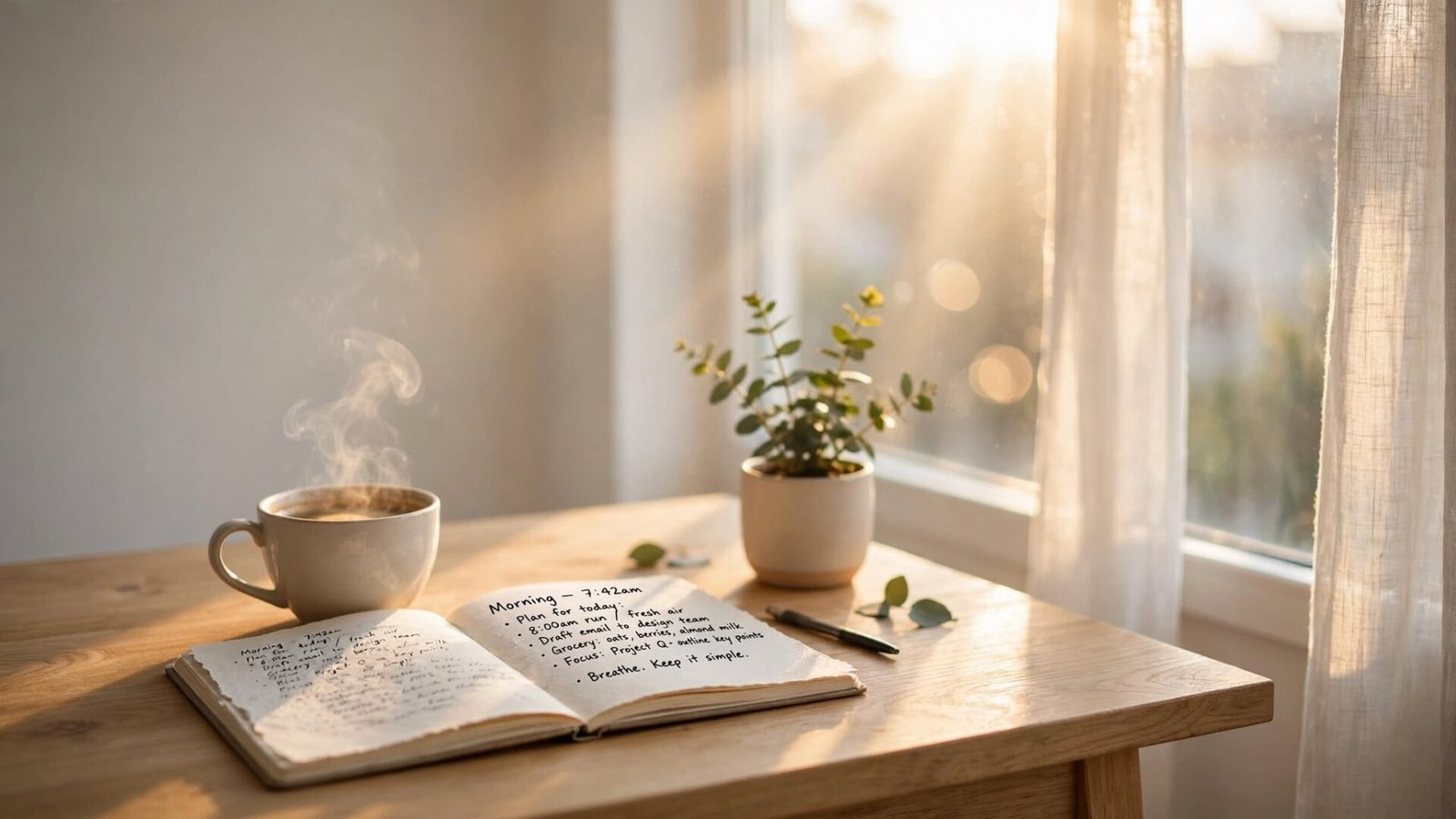
I’m not going to pretend these 10 lifestyle changes are secret or revolutionary. Some of them you’ve probably heard before. But there’s a difference between hearing something and actually understanding why it works — and more importantly, how to make it stick. That’s what we’re going to dig into here. No fluff, no vague inspiration. Just real changes that real people have used to rebuild their daily routine from the inside out.
First, Let’s Talk About Why You’ve Failed Before
Here’s the thing nobody tells you: your brain genuinely doesn’t like change. Not because you’re lazy — but because your nervous system is wired to treat unfamiliar patterns as potential threats. This is why going from zero to “new year, new me” in January almost always crashes by February. You’re not weak. You’re just fighting biology with willpower, and willpower always loses that fight eventually.
What actually works is something called habit stacking — slipping a new behaviour quietly alongside something you already do. You don’t build a new routine. You just nudge the one you already have. That’s the thread running through every change in this list. Small enough that your brain doesn’t panic. Consistent enough that it eventually becomes invisible.
“You do not rise to the level of your goals. You fall to the level of your systems.”
— James Clear, Atomic Habits
10 Changes That Are Small Enough to Start Today
These aren’t ranked by importance — they’re ordered the way I’d introduce them to a friend over coffee. Start wherever one feels most relevant to where you are right now.

1
🧠 Neuroscience-Backed
Put Your Phone in Another Room at Night
I know, I know — you use it as an alarm. Buy a three-dollar alarm clock and thank yourself for years. The moment your eyes open and you reach for your smartphone, you tell whoever texted you in the morning or whatever news headline is the loudest that morning has overtaken your morning management. Your mind hasn’t even fully awakened, though, and you’re already reacting to the world rather than how you choose to interact with it. Try to spend the first 20 minutes of your day doing literally something that isn’t on a display screen — sit down with coffee, stretch out on the floor, stare out the window. It feels weird at first. Then it starts feeling like the best part of your day. This one shift alone has more impact on your daily routine improvement than most people expect.
2
💧 Hydration Science
Drink Water Before Your Coffee. Seriously, Before.
You’ve been asleep for 7–8 hours without drinking anything. Your body is running low before the day even starts, and most people respond to this by immediately drinking a diuretic (coffee). It’s like trying to water a plant with more sun. Two glasses of water before your first coffee — that’s it. No lemon required, no unique alkaline logo required, just plain water. You’ll notice a lot less of that mid-morning foggy stoop, and your coffee will definitely hit harder because your body isn’t playing trap-ups. It doesn’t cost anything, it takes ninety seconds, and it’s actually one of the most underrated lifestyle modifications to better living that no one talks about because it’s not glamorous enough to go viral.
3
🏃 Movement Science
Move for 10 Minutes—Not to Get Fit, But to Wake Up
Forget the idea of ”running” early in the morning if that seems impossible. I wouldn’t say that speculatively now. I’m just talking about 10 mins of movement to get your blood going — a stroll off the street and back, stretching some sequences on a yoga mat you haven’t rolled out in months, or just dancing around your kitchen while the kettle boils. Movement in the morning changes your mind’s chemistry for hours afterwards. You think it’s extra easy; you’re a lot less irritable, and you make better decisions. As a non-public boost tip, this one is underrated because people keep framing it as fitness rather than what it really is—a mental reset that requires you to insert your frame.
4
📋 Productivity Research
Write 3 Things Down Before You Open Your Laptop.
Not a to-do list. Not a goals spreadsheet. Just three things—the three things that, if you get them completed these days, would make you feel like the day sincerely meant something. Write them by way of hand. There’s something about physically writing that makes your mind commit differently than typing into a notes app that’ll get buried under forty different tabs. I started out doing this years ago after realising I changed into ending every day feeling “busy”; however, now I am not really complete with something that mattered. The listing does not have to be ambitious. “Call the dentist, end that phase of the record, and cross for a stroll” counts. The point isn’t productivity theatre—it’s clarity. And clarity is the foundation of any real daily routine improvement.

5
🌱 Mindfulness Research
Stop and Breathe for 5 Minutes in the Middle of the Day
Not in the morning, no longer at night — in the middle of the day, while the entirety feels like it’s piling up and you are 1/2 found in the whole lot. The 4-7-eight respiration approach is stupidly easy: breathe in for 4 counts, pause for 7, and breathe out for 8. Do that four or five times. It sounds like a Pinterest poster, but the physiological effect is real — it manually shifts your nervous system out of “stress mode”. I set a recurring reminder on my phone at 1:30 PM. Some days I ignore it. But the days I actually stop and do it, the entire second half of the day feels different. Even a wellness routine as minimal as this one — five minutes, once a day — compounds into something significant over months. Try it between two tasks instead of reaching for your phone.
6
🥗 Nutrition Science
Cook One Real Meal a Day — Just One
Nobody is asking you to meal prep on Sundays or give up everything you enjoy eating. One real meal — something you actually cooked from ingredients you can recognise — per day. That’s the whole ask. It could be as easy as eggs and veggies for breakfast or a bowl of dal and rice for dinner. The connection between what you devour and the way you experience mentally is more direct than most people recognise. Ultra-processed meals would not simply have an effect on your waistline — it impacts your awareness, your temper balance, and your energy levels in ways that are hard to pin down until you begin consuming them otherwise, and all of a sudden the fog has lifted. Start with dinner. It’s the easiest meal to control, and the effect on your sleep alone is worth it.
7
📵 Digital Wellness
Give Yourself One Screen-Free Hour Before Bed
This one is genuinely hard in a way the others aren’t, because the algorithm is specifically designed to make you stay. But here’s what’s actually happening when you scroll until you fall asleep: the light from your screen tells your brain it’s still daytime, your melatonin drops, and you end up in lighter, less restorative sleep — even if you sleep for eight hours. You wake up tired for no obvious reason. The fix isn’t a special supplement or a new mattress. It’s just: put the phone down an hour before bed and do something quieter. Read a book. Have a conversation. Stretch a little. Sit with the day before it ends. Out of all the lifestyle changes for a better life on this list, this one has the most visible before-and-after. Most people notice the difference within three days.

8
🌿 Nature Therapy
Go Outside for 15 Minutes—Without a Podcast
I used to think that walking with a podcast counted as “nature time”. It doesn’t, really—because your attention is somewhere else entirely. There’s something that happens when you’re outside without any input coming in: your eyes soften, your thoughts slow down, and you notice things you’d completely stopped seeing. A tree, the temperature of the air, and a bird being unnecessarily loud. It sounds almost too simple to matter. But walking outside without headphones for just 15 minutes a day has a measurable effect on anxiety and overthinking—something that a lot of people who sit at desks all day genuinely struggle with. It’s one of those wellness routine habits that your brain will resist (“I don’t have time, I’ll listen to something useful”) right up until the moment you actually do it. See also our post on the benefits of daily nature walks—more depth on this one there.
9
🤝 Social Science
Have One Real Conversation Every Day
Not a WhatsApp reply. Not a comment on a post. An actual conversation—the kind where you’re both present and neither of you is also looking at a screen. It could be five minutes with a colleague about something that isn’t work. A quick call to your mum while you’re making tea. Sitting with your partner and actually talking about something. We’ve quietly replaced most of our real social interaction with passive digital connection, and the loneliness that comes from that is weirdly invisible—you can be “connected” to hundreds of people online and still feel quietly isolated. This personal growth tip doesn’t sound like a lifestyle transformation, but over weeks of doing it consistently, people notice their mood shifting in ways that feel almost disproportionate to the effort involved.
10
📓 Psychology Research
End Your Day by Writing Three Things That Went Right
Not “three things I’m grateful for” in the abstract—that phrasing makes it feel like homework. Instead, just write three specific things from today that actually went okay. Your coffee was good. Someone laughed at your joke. You finished the thing you’d been putting off. The point of this habit is not spiritual—it is neurological. Your mind has a built-in negativity bias; that means it certainly holds onto what went wrong, and we could slide past what went right. Writing 3 advantageous specifics down at the close of each day gently trains that sample in a one-of-a-kind path over the years. You don’t need a fancy journal. A notes app works. A sticky note works. Three sentences before you go to sleep. That’s it. That’s the whole habit-building practice. And it’s quietly one of the most transformative things on this list.
How to Actually Start (Without Burning Out by Thursday)
The fastest way to make sure none of this happens is to try all 10 at once. I’ve done it. You’ve probably done it. Pick one. Stick with it for a week until it feels boring—that’s how you know it’s becoming automatic. Then add another. Here’s a rough roadmap if you want a structure to follow:
📅 30-Day Habit Building Roadmap

What to Expect: Realistic Results
Lifestyle modifications for better lifestyle consequences do not produce overnight miracles—however, they do produce consistent, compounding upgrades. Within the first week, most people wake up with more sleep and barely any extra energy. By week two, focus and temper begin improving tremendously. By the end of month one, you’ll probably have greater intellectual clarity, lower tension, higher physical energy, and a fundamentally unique relationship with your own time and interests.
The key isn’t perfection—it is consistency. Missing a day isn’t always failure; it is human. The aim is to make those behaviours the course of least resistance in your existence, not sources of guilt. Track your development loosely, rejoice in small wins loudly, and remember that each expert in private increase suggestions commenced exactly where you are now.
One Last Thing Before You Close This Tab
You’re going to feel the urge to screenshot this, save it, forward it to yourself, and then do nothing. I say that without judgement—I’ve done it hundreds of times. The distinction between the people who, without a doubt, alternate their everyday routine and the folks who gather articles about converting their daily routine is depressingly easy: the first organisation chooses one factor and starts these days. Not day after day, not next Monday.
Pick the only one on this list that made you suspect, “Yeah, I need to try this.” Just the one. Do it tomorrow morning. See how it feels. The rest of the list will still be here when you’re ready for it. Small alternatives, made constantly, within the direction of the existence you sincerely need — that’s the complete secret. There is not a fancier model of that.
Want to go deeper? We’ve written about appreciating nature every day, building a calm home environment for wellbeing, and why slow travel changes how you see your daily life too — worth reading if any of today’s tips resonated.



+ There are no comments
Add yours